


Category: Uncategorized

  • Self-starting membrane success

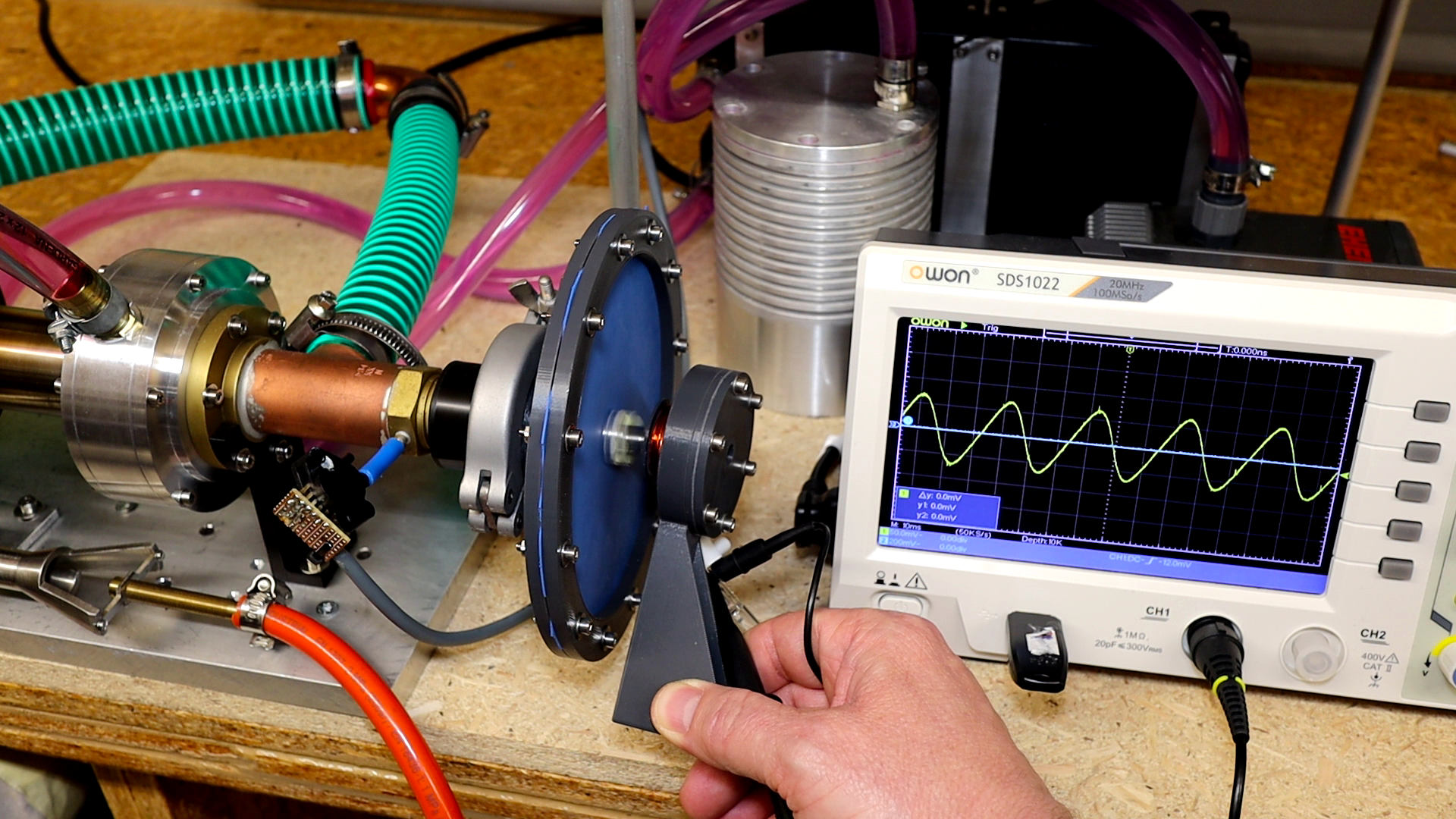
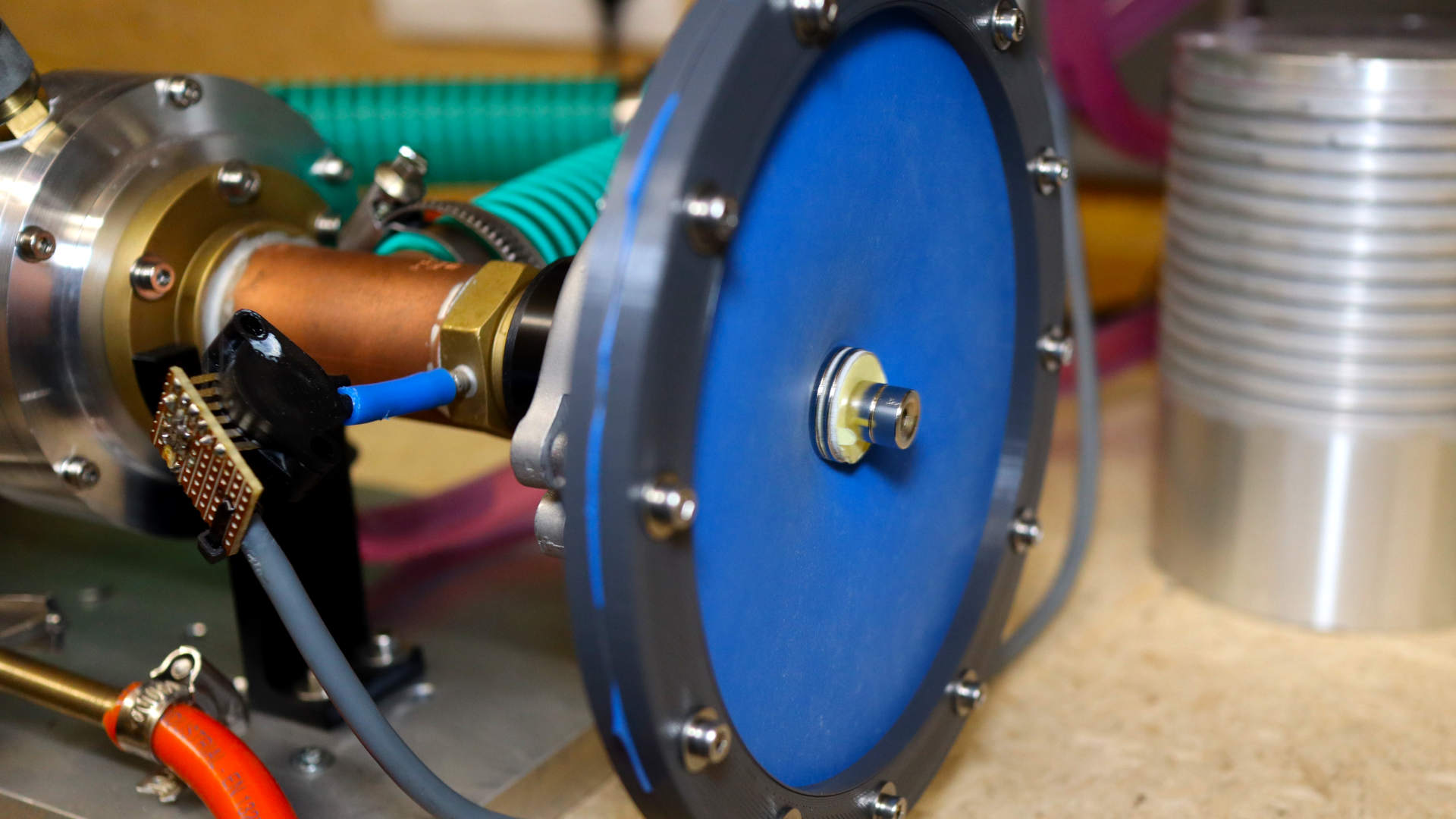
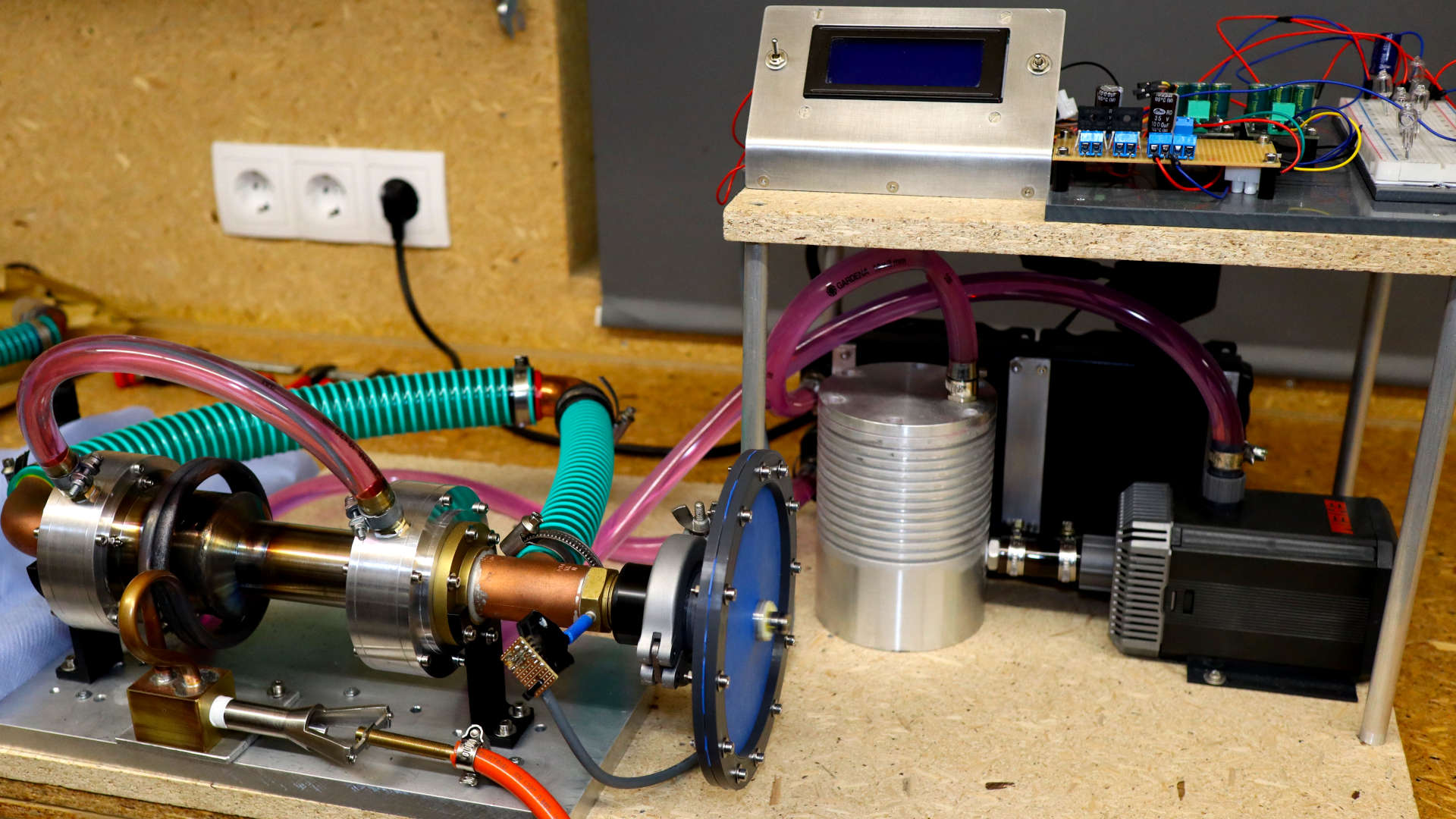
    The next attempt, using a natural rubber diaphragm with a printed diaphragm mount, was an instant success!
    The thermoacoustic motor ran faster than ever before, at over 2600 rpm.
    But the best thing is that, for the first time, the motor can start up on its own!
    This simplifies the upcoming pressure charging process enormously, and I will now be working intensively on it.
    To achieve this, the motor must be made completely airtight, and the rear of the membrane must be sealed with a buffer chamber featuring an integrated linear generator.
    I intend to construct the entire new feedback loop using 3D-printed parts with clamp flange connections.
    In any case, many more tests with different membranes still need to be carried out to optimally achieve the resonance frequency.
    I’m always very grateful for any tips on this.
    Here’s a video link to the new membrane power extraction core:
    Membrane Video

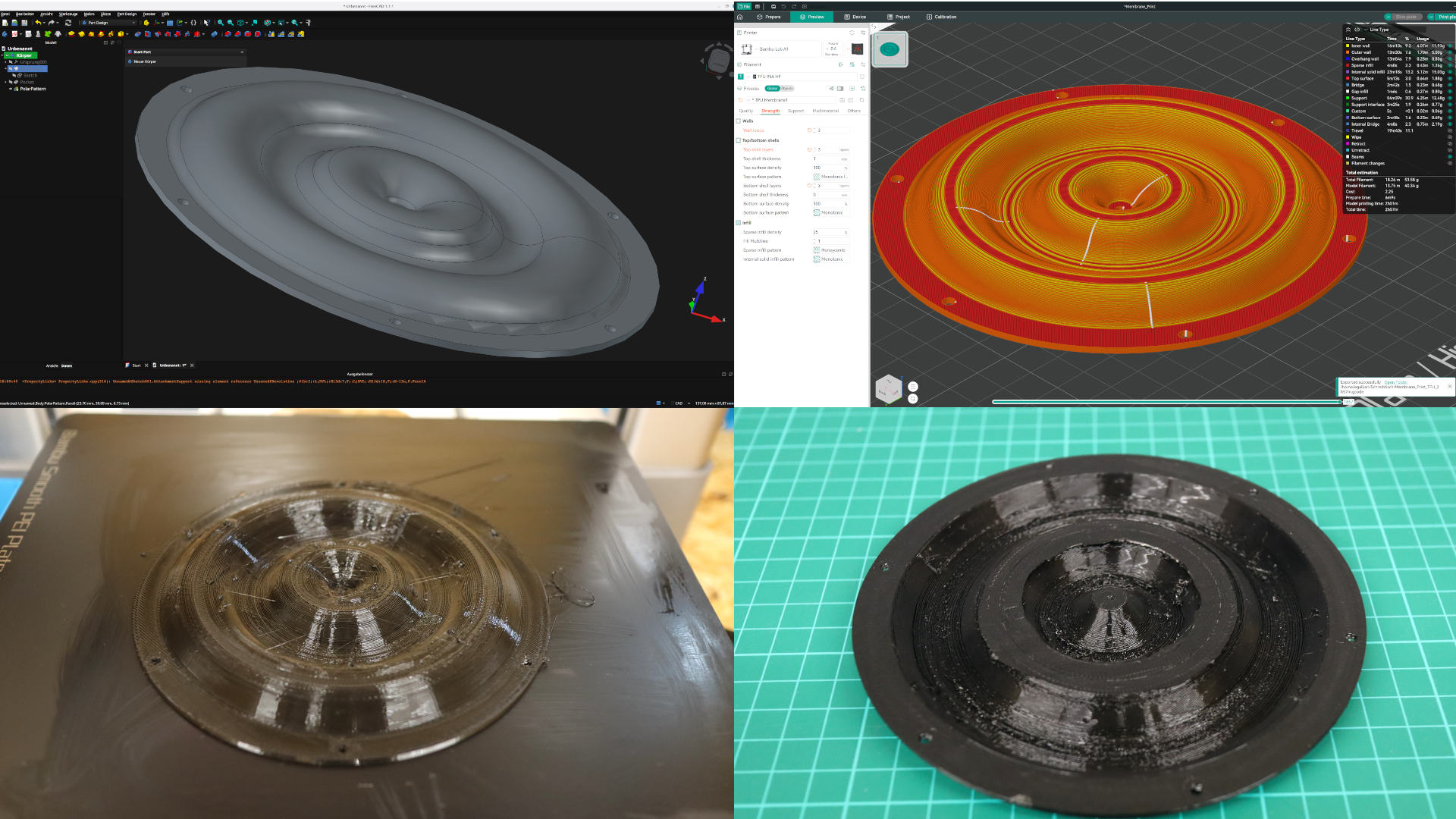
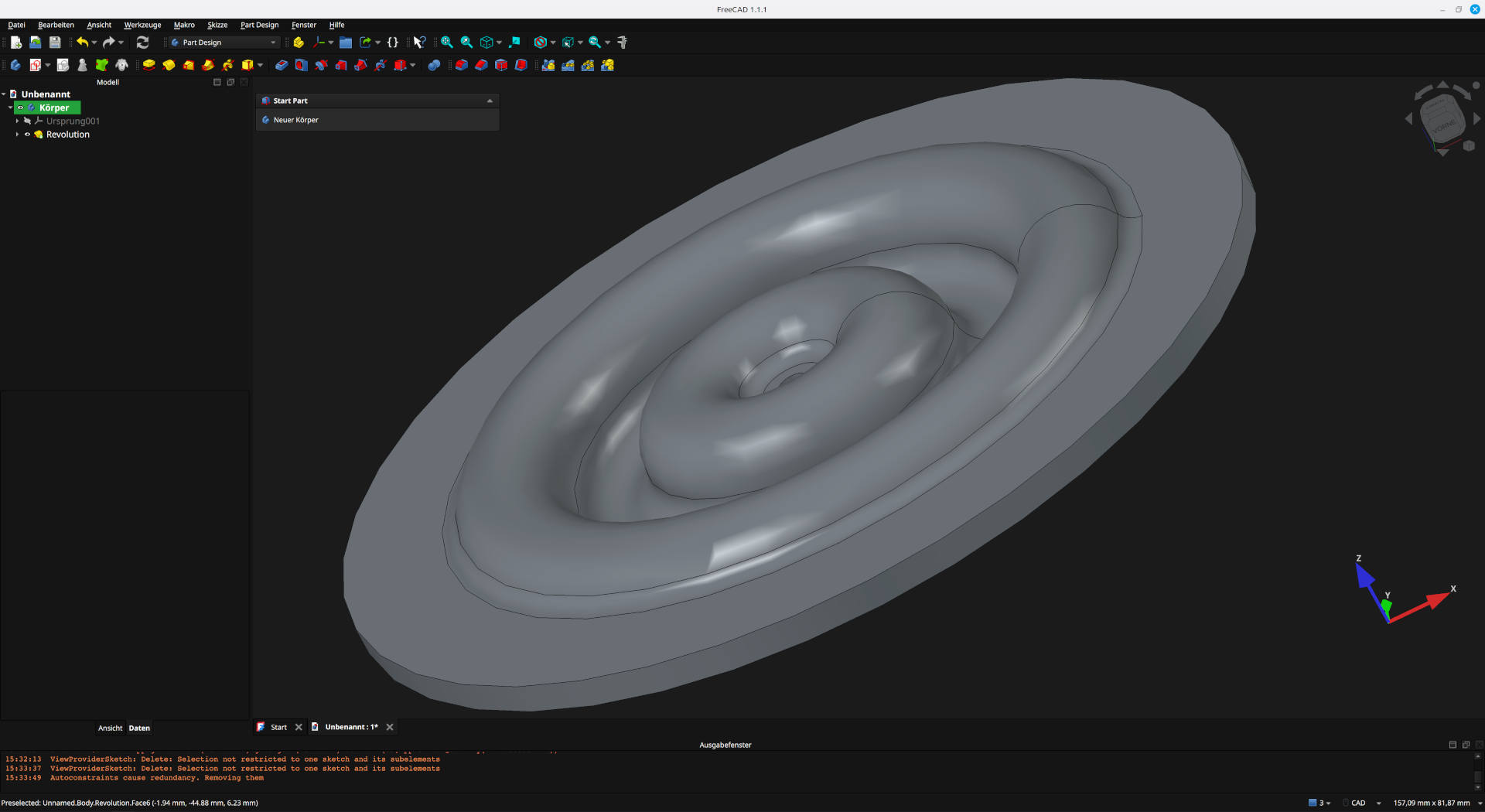
  • Printed TPU membrane

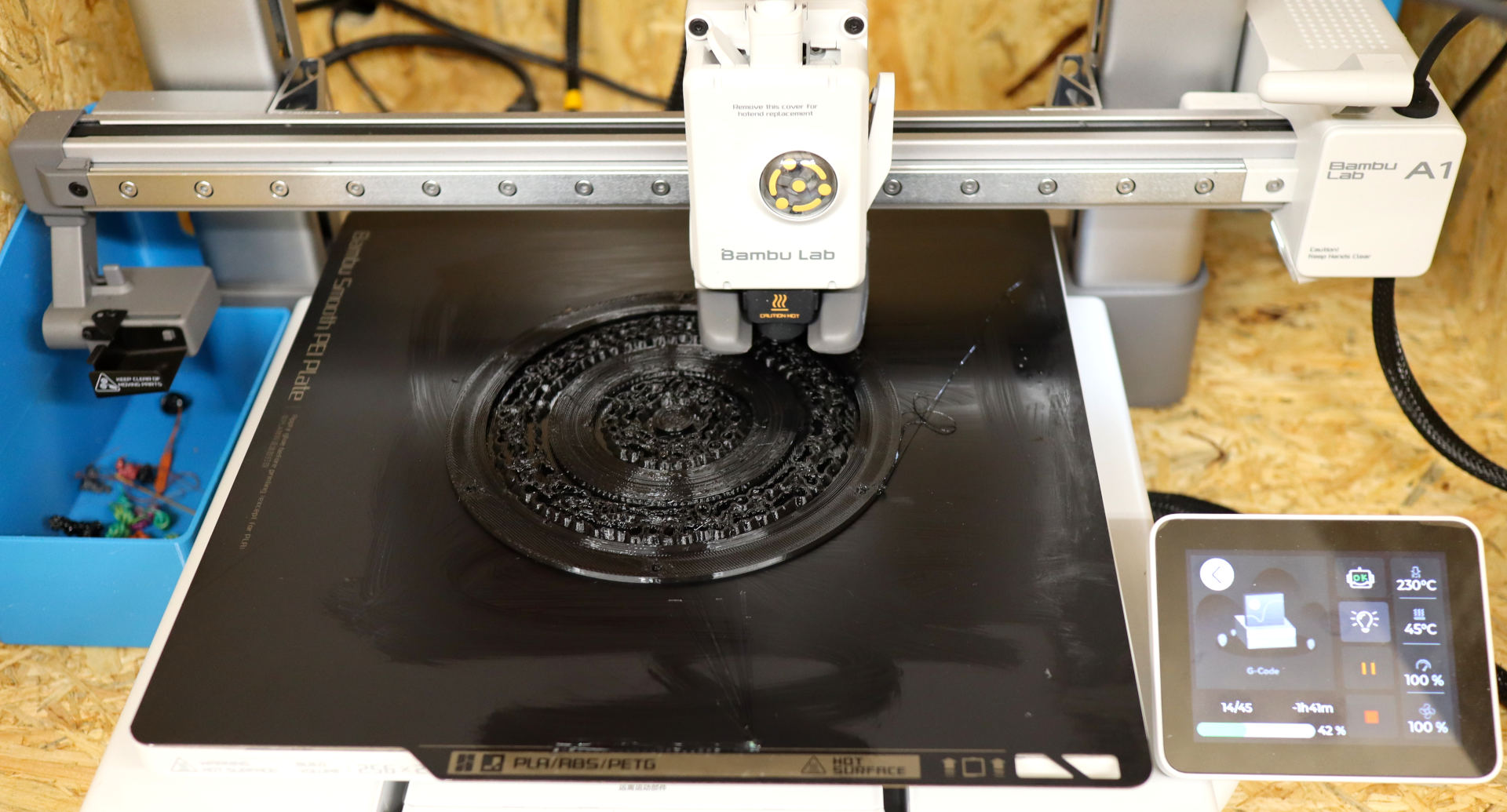
    Printing with TPU went smoothly right from the start, though the retraction needs to be increased slightly to reduce stringing and produce neater seams.
    As expected, the support material was very difficult to remove; I simply need a printer with two nozzles.
    The elasticity isn’t very high; for this type of membrane, this TPU is far too hard, inflexible and unusable.
    I’ll try printing a bellows again, but I reckon this TPU is completely unsuitable as a flexible piston replacement.
    Is it worth giving PEBA a go, or should I just try making moulds for casting with silicone rubber straight away?

  • TPU printed power extraction unit

    As the experiments with the lightweight plastic pistons were so successful, I decided to try a further simplification to reduce the moving masses.
    I have just received my roll of TPU filament and will now create some test parts to determine whether the flexibility and durability of TPU are sufficient for serious test runs.
    Unfortunately, it was only after placing the TPU order that I learnt that PEBA apparently has significantly better elastic properties.
    However, a membrane intended for long-term use will probably have to be moulded from silicone rubber anyway.
    I hope to be able to present the initial results of the tests on the TPU-printed power extraction units in the next few days.